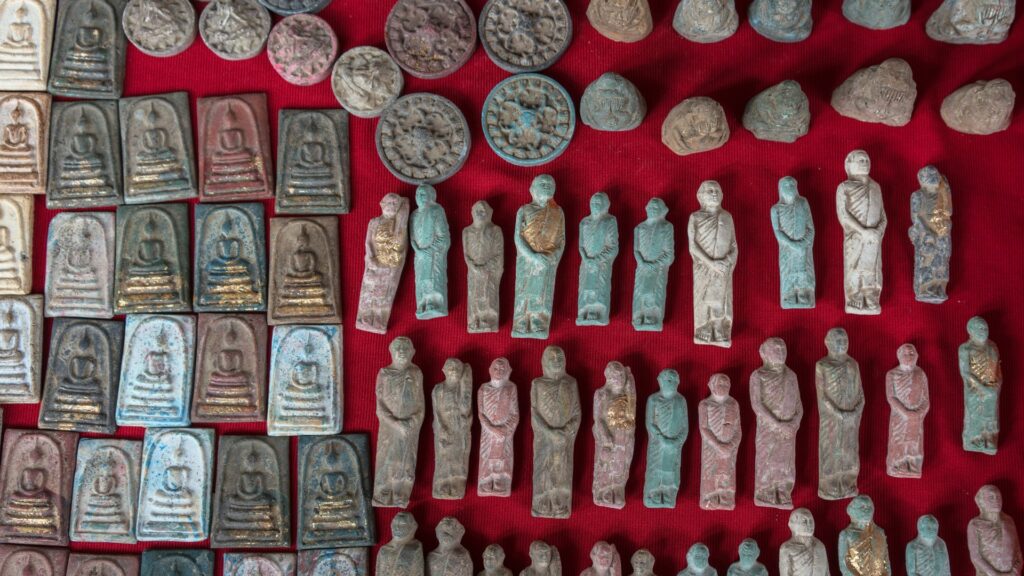
In the marketplace of spiritual artifacts and talismans, the allure of acquiring consecrated objects can sometimes overshadow a prudent approach to spiritual growth. However, there’s a side of this story that often remains veiled—the unknown energies that already inhabit non-consecrated objects. Just as an unattended garden may become overrun with weeds and invasive species, objects not subjected to a spiritual consecration process may carry an array of energies that are not only unknown but possibly detrimental.
Let’s consider the journey of a typical artifact before it lands in your hands. It may have been crafted in a factory where the emotional climate was tense or exploitative, stored in various warehouses, and finally displayed in a retail setting where countless individuals with differing energies interacted with it. Each phase imprints layers of energy onto the object, much like grime accumulating on an unused window. These layers comprise a mélange of emotions, thoughts, and perhaps even spiritual vibrations that are often discordant and conflicting. Now, picture yourself bringing such an object into your intimate space, perhaps even using it as an aid for meditation or as a talisman to carry with you. The energies that have adhered to this object, unknown to you, start to interact with your personal energy field.
It’s somewhat akin to bringing a wild, unidentified plant into your home garden. You wouldn’t know whether it’s a beneficial herb or a poisonous weed until it’s perhaps too late and it has either harmonized with or disrupted your existing flora. So too, an unconsecrated object of unknown energetic origins could throw your own emotional and spiritual equilibrium into disarray. To take this further, when you’re emotionally or spiritually vulnerable, these objects may act like opportunistic infections, aggravating your condition and potentially causing harm.
For those considering the acquisition of spiritual artifacts, this presents a significant conundrum. How can one ensure that these objects serve to enhance, rather than undermine, their spiritual journey? This is where the value of being mindful about bringing any object into your life comes into play. While there’s no one-size-fits-all answer, a general rule of thumb might be to approach the process with discernment, much as you would when inviting a stranger into your home.
This also brings into focus the ethical considerations around spiritual consumerism. Are we merely accumulating these objects as aesthetic trinkets or status symbols, devoid of a deeper understanding of their energetic consequences? The urgency for mindfulness in our spiritual acquisitions becomes glaringly evident. Rather than rushing to collect various artifacts with alleged spiritual potency, it might serve us better to cultivate an internal sanctuary, one that doesn’t rely on external objects for spiritual enrichment.
So, the next time you’re tempted to purchase a supposedly powerful amulet or a mystically charged artifact, pause and consider the unseen dimensions. Ponder whether that object might carry unknown energies that could disrupt rather than enhance your spiritual life. Sometimes the most profound spiritual growth comes not from acquiring more but from understanding deeper, from tuning into your inner wisdom rather than relying on external talismans, whose origins and influences may forever remain a mystery.
Beyond Material Acquisition: The Unique Energetic Risks and Rewards of Sacred Objects.
Acquiring a spiritual or sacred object is fundamentally different from buying, say, a household appliance. When you acquire a blender or a TV, you’re generally not intending to align your personal energy with it; its purpose is primarily functional. However, when you bring home a spiritual artifact or a religious sculpture, the stakes are higher. You’re not just placing it in your living room as a decorative piece; you’re inviting it into your spiritual sphere, into the sanctum of your personal energy.
By nature, spiritual practices often involve opening up your energetic field to greater influences. Whether it’s during prayer, meditation, or any form of worship, you are more receptive to energies around you. It’s this heightened state of openness that can turn a seemingly innocuous object into either a powerful catalyst for spiritual growth or a potential disruptor of your inner harmony. Unlike a table, which just holds your books and coffee cups, a religious sculpture or sacred object operates on energetic levels that you may not fully perceive but definitely can impact you.
It’s like when you willingly open your door, you allow the outside air to mingle with the inside. Most times, it’s just fresh air, but sometimes it could bring in a drift of less pleasant scents or even allergens. Now imagine being in a state where your door isn’t just open, but you’ve actively got fans running, pulling the outside air in. That’s akin to your state of receptivity when dealing with sacred objects. You’re not just passively open; you’re actively inviting those energies to mingle with your own. Hence, it becomes even more imperative that the energy you’re inviting is harmonious with your spiritual goals and well-being.
In such instances, the provenance of these objects turns from a minor consideration into a critical one. Knowing how and by whom the object was consecrated—or if it was consecrated at all—becomes tantamount to knowing the ingredients in a dish you’re about to consume. Except, in this case, what you’re consuming isn’t food, but energy—energy that has the potential to significantly alter your spiritual and emotional equilibrium.
Therefore, if you choose to incorporate sacred objects into your spiritual practice, it’s important to exercise the utmost caution and discernment. Remember, this isn’t just another acquisition; it’s an invitation to energies that could profoundly influence your spiritual journey. So, tread carefully and wisely. Choose not just with your eyes, but also with your intuition and, where possible, informed knowledge about the object’s origins and the intentions that went into its creation. Your spiritual well-being may very well depend on it.
The Sacred Journey of Thai Amulets
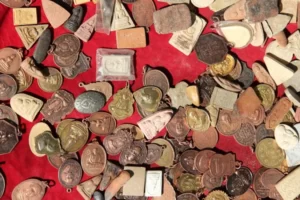
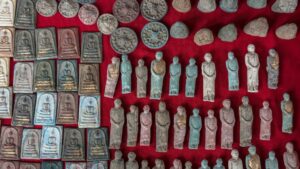
To truly appreciate the significance of a consecrated amulet, one must delve into the meticulous process of their creation and distribution throughout Thailand. Thai amulets generally fall into two categories: mass-produced in factories or handcrafted by temple monks. Factories may churn out large quantities of a particular amulet type, which are then distributed to shops across Thailand and increasingly to a global market via online platforms. Devotees or temple monks often purchase these amulets in bulk, bringing them back to temples for further spiritual enhancement and consecration before offering them to the faithful. Although these factory-produced amulets are sometimes crafted according to the specifications of a knowledgeable monk, using specific materials or sacred soil, they remain “consecration-ready” until they undergo the essential ritual of consecration.
The Critical Role of Authentic Consecration
Many amulets available on various platforms are these “consecration-ready” versions, which lack the vital consecration process. Without proper consecration, these items do not embody the divine energy and spiritual potency they are meant to convey.
Externally, a consecrated amulet and a non-consecrated one may appear identical, as they could be produced in the same factory. However, the true distinction becomes apparent over time, as only a consecrated amulet will imbue its wearer with the intended spiritual energy and benefits. The genuine power of consecration is revealed through the transformative effects it has on the wearer’s life, providing tangible shifts in energy and profound spiritual benefits that underscore the sacred journey of these revered objects.
Geometry and Materials in Sacred Items: The Importance of Consecration

In ancient wisdom, there is a profound understanding that certain shapes, geometries, and materials can act as conduits for energies. Much like how copper is highly conductive to electricity, specific sacred geometries and materials enhance the “conductivity” for various forms of spiritual and cosmic energies. When a sacred object is crafted using sacred geometry, it naturally becomes a conduit of energies. However, without proper consecration, such an object can absorb and store all kinds of surrounding energies, which can affect the energy field of the wearer in unpredictable ways. This is why the consecration process is vital; it imbues the object with dominant, potent cosmic or spiritual energies, making it resilient against less intensified, surrounding energies that might otherwise penetrate.
The geometry of sacred items plays a crucial role in their ability to channel energies. Sacred shapes and patterns are believed to resonate with the fundamental structures of the universe. When an object is designed with these geometries, it enhances its ability to attract, store, and emit specific types of energies. For example, the curvature and shape of an amulet or statue can significantly influence its energetic properties. Unconsecrated, these shapes might draw in a mix of energies from their surroundings, some of which might not be beneficial. Proper consecration aligns these energies with a specific, positive purpose, ensuring that the item serves as a powerful tool for spiritual growth and protection.
Materials used in the creation of sacred items also hold significant importance. Metals like gold, silver, and copper, as well as natural materials like crystals and specific types of wood, are often chosen for their inherent energetic properties. These materials can enhance the object’s ability to conduct and store energy. However, just like the geometry, the materials alone are not enough. Without consecration, even the most energetically potent materials can absorb negative or chaotic energies from their environment. Consecration serves to purify and program these materials, aligning them with higher, more beneficial energies and preventing the intrusion of unwanted influences.
When a sacred item is consecrated, it is imbued with strong positive cosmic energy, creating a sort of energetic shield. This process involves rituals and prayers that connect the item with divine or spiritual forces, charging it with specific intents and purposes. The consecration ensures that the item draws and stores more of the same polarity of energies, effectively deflecting and neutralizing any surrounding energies that are not aligned with its consecrated purpose. This makes consecrated items powerful tools for protection, healing, and spiritual enhancement.
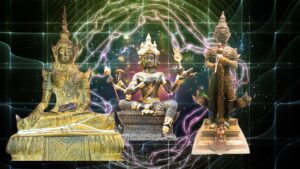
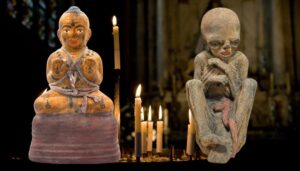
Purchasing a sacred item, such as an amulet or statue, is not merely about acquiring a piece of art or a decorative object. The shape, geometry, and materials of these items are designed to be potent conduits of cosmic energies. Even shapes resembling living beings, animals, or insects can act as conduits for certain energies or entities. This is why tales of dolls or human-like figures becoming possessed are not uncommon; their shapes naturally attract specific types of energies. Therefore, it is essential to approach the purchase of sacred items with caution and awareness, ensuring that they are properly consecrated to serve their intended spiritual purpose effectively.