Does it truly matter whether a person’s ashes are kept in an urn or scattered into the sea? Does the way their remains are handled affect the blessings their descendants receive? These questions go beyond mere tradition or belief. They touch upon something far deeper—the unseen bond that persists between the living and the dead. It is not just about rituals; it is about energy, entanglement, and the continuous flow of life, even beyond death.
You must understand, death does not immediately sever a person from this world. Even when the body has stopped breathing, a presence remains. Some call it the soul, others call it spirit, but beyond all names, it is the energy of that being—an energy that still holds its ties to the world it left behind. And just as the living are bound to their family through blood, through love, through memory, this connection does not suddenly vanish when the body turns to ashes.
That is why, across cultures and traditions, funeral rites exist—to manage this transition, to handle what is left behind, not just physically, but energetically.
Why Is There Still a Connection After Death?
Have you heard of quantum entanglement? Science has only recently begun to understand what spiritual traditions have known for centuries. A thing that was once connected remains connected, even across vast distances. If I take a piece of your DNA and bring it to another country, I can still influence you from afar through rituals, through prayers, through intention. That connection does not rely on proximity—it exists because it is part of the same whole.
This is exactly what happens when someone dies. Their DNA, their energy, does not simply disappear. Their presence still lingers in the lives of those they left behind. The entanglement remains, and depending on how it is handled, it can either bring stability and blessings or burdens and unresolved energy.
So, the real question is not just where the ashes go—but what happens to the energy they left behind.
Keeping the Ashes vs. Scattering Them—Does It Make a Difference?
You may wonder, does it matter if we keep the ashes or scatter them? The answer is—it depends on the person’s life, their karma, and what would best serve both them and their descendants.
- Keeping the Ashes in an Urn
Some believe that keeping the ashes allows a continued connection to the deceased, especially if they were a person of good merit. If someone lived a life of kindness, of wisdom, of spiritual accumulation, their presence remains a blessing to their descendants. That is why some great monks have their bodies preserved—because their energy continues to radiate, influencing those who remain. But the opposite is also true. If the deceased carried unresolved burdens, deep suffering, or karmic debts, then keeping their remains nearby means that their energy, too, remains nearby. This is why in some cultures, the living continue to offer prayers, light incense, and make offerings—to cleanse and refine the energy of the deceased so that any lingering entanglement does not cause disturbances to the living. - Scattering the Ashes in Water
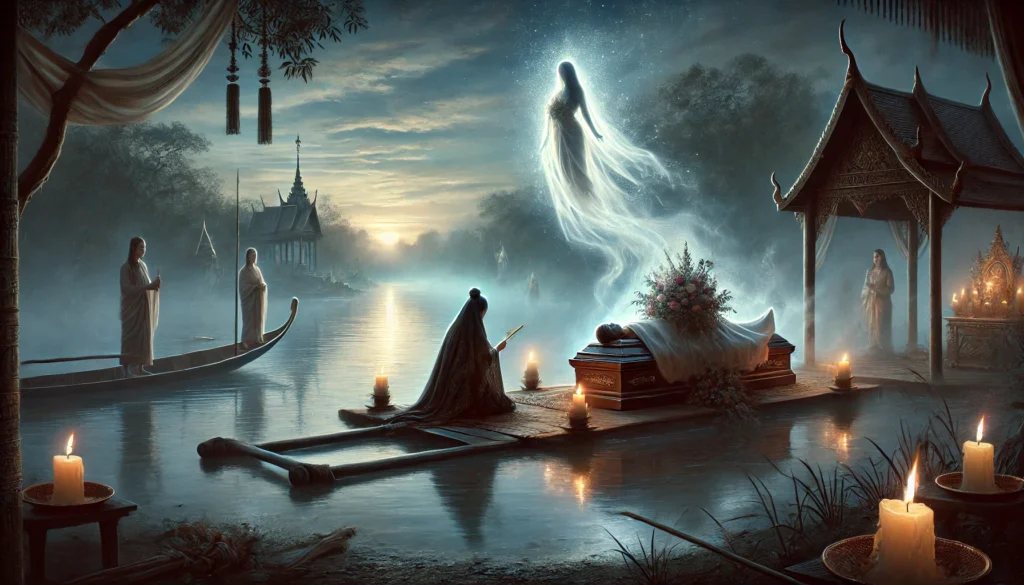
Water is known to purify, to cleanse, to dissolve what was once bound. In many traditions, when a person has suffered greatly or has carried heavy karma, their ashes are released into a river or the ocean—not merely as an act of letting go, but to wash away any lingering ties that could affect their descendants. But this is not done thoughtlessly. Before scattering, there are days of prayers, of chants, of guiding rituals—to ensure the energy is properly prepared for release. If done correctly, the entanglement is completely cut, and both the deceased and the living can move forward without carrying unnecessary weight from the past.
So you see, there is no absolute right or wrong—it is about what is needed for that particular soul. Do they need to stay as a presence, guiding their family? Or do they need release, freeing themselves and their descendants from past burdens?
Why Do People Still Offer Yearly Prayers for the Dead?
If the connection weakens over time, then why do people continue to offer prayers, visit ancestral graves, and perform rituals year after year? The answer is simple: because the energetic connection is still there, even if faint.
Just as dust gathers in a home if left unattended, so too can energies become unbalanced if not maintained. When you pray for your ancestors, when you make offerings, when you chant for them—you are cleansing the energy, keeping it in harmony, ensuring that whatever remains of their presence is beneficial and not disruptive.
Some might call this receiving blessings, but in truth, it is simply about keeping the connection in balance.
Entanglements Beyond Blood—Why Marriage and Relationships Also Matter
You may think that this connection only applies to family, to those who share blood. But what about a husband and wife? Lovers? Close companions?
Here is something most people do not realize: sexual intimacy creates an entanglement, even if there is no blood relation.
Each time two people engage in sexual relations, their energies intertwine, forming a connection that lasts for seven years before it gradually fades. This is why many relationships experience change after the seven-year mark—it is not just psychological, but energetic.
If a person has had many partners, they may still carry the energetic imprints of those past relationships long after they have ended. Each person leaves a mark, a residue, an influence that subtly shapes the individual’s energy over time.
This is also why in spiritual traditions, mindfulness in relationships is emphasized—because entanglement does not dissolve overnight. The more entanglements one accumulates, the more complex their energetic field becomes.
But entanglement is not limited to direct contact. Even a name, a photograph, a birthdate combined in ritual can create an energetic link. This is why prayers and blessings can reach people from afar—because energy is not bound by distance, only by connection.
How to Ensure a Smooth Transition for the Departed
Now, knowing all this, what can one do to ensure that a departed loved one moves on smoothly, while also protecting the living?
- Understand the nature of their energy
- If they were a person of great merit, keeping their ashes may bring blessings.
- If they suffered greatly, releasing their remains through water rites may be more beneficial.
- Perform proper cleansing rituals
- Whether through prayers, chanting, or offerings, these actions help to refine and harmonize their energy.
- The living must not neglect their own energy—because the entanglement flows both ways.
- Be mindful of lingering entanglements
- Whether through DNA, past relationships, or family bonds, these connections exist beyond physical life.
- If unresolved, they can continue affecting generations, so handling them with awareness and wisdom is crucial.
You see, funeral rites are not just customs, not just things we do because tradition demands it. They serve a deeper purpose—to manage the energy left behind, to guide the departed, and to ensure that the living are not burdened by what came before them.
Death does not mean disappearance. It means transformation. And how that transformation unfolds depends on how we handle it—whether with understanding, with wisdom, or with ignorance.
So when you think of funeral rites, do not just think of ashes, or where they are placed. Think of the energy, the connection, and the balance that must be maintained. In the end, it is not just about the dead—it is about how the living continue forward, carrying either burdens or blessings, depending on the choices they make.