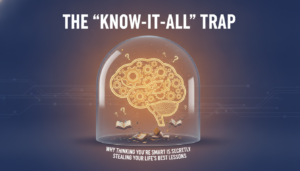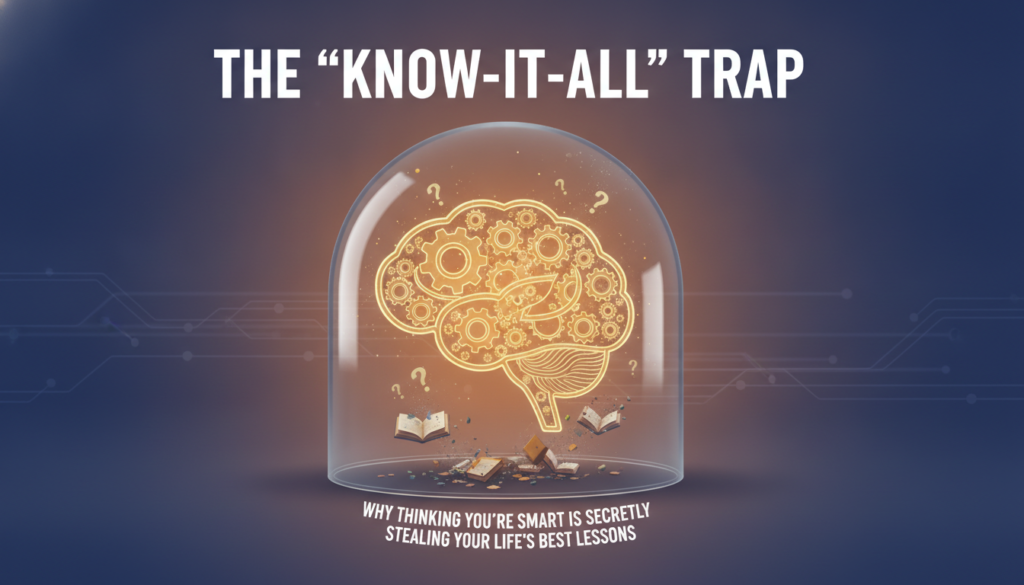
Life has a peculiar way of teaching us. Often, the very thing we consider our strength — our intellect, our accumulated knowledge — becomes our greatest hindrance. You believe you’re smart, you’ve got answers, you understand. But let’s be blunt: that very belief is likely the silent thief, stealing the richest, most profound lessons life has to offer. It’s a trap, subtle and pervasive, convincing you that your full cup is a blessing, when in reality, it’s a barrier.
The Illusion of Knowing
Think for a moment about a closed fist. It can hold what it already has, yes, but it cannot receive anything new. Your mind, when it believes it already knows, operates like that clenched fist. It becomes a container that is full, leaving no space for fresh perspectives, challenging ideas, or uncomfortable truths. This isn’t about being wrong; it’s about being full. And a full vessel cannot be refilled.
Why Your “Knowledge” Is a Prison
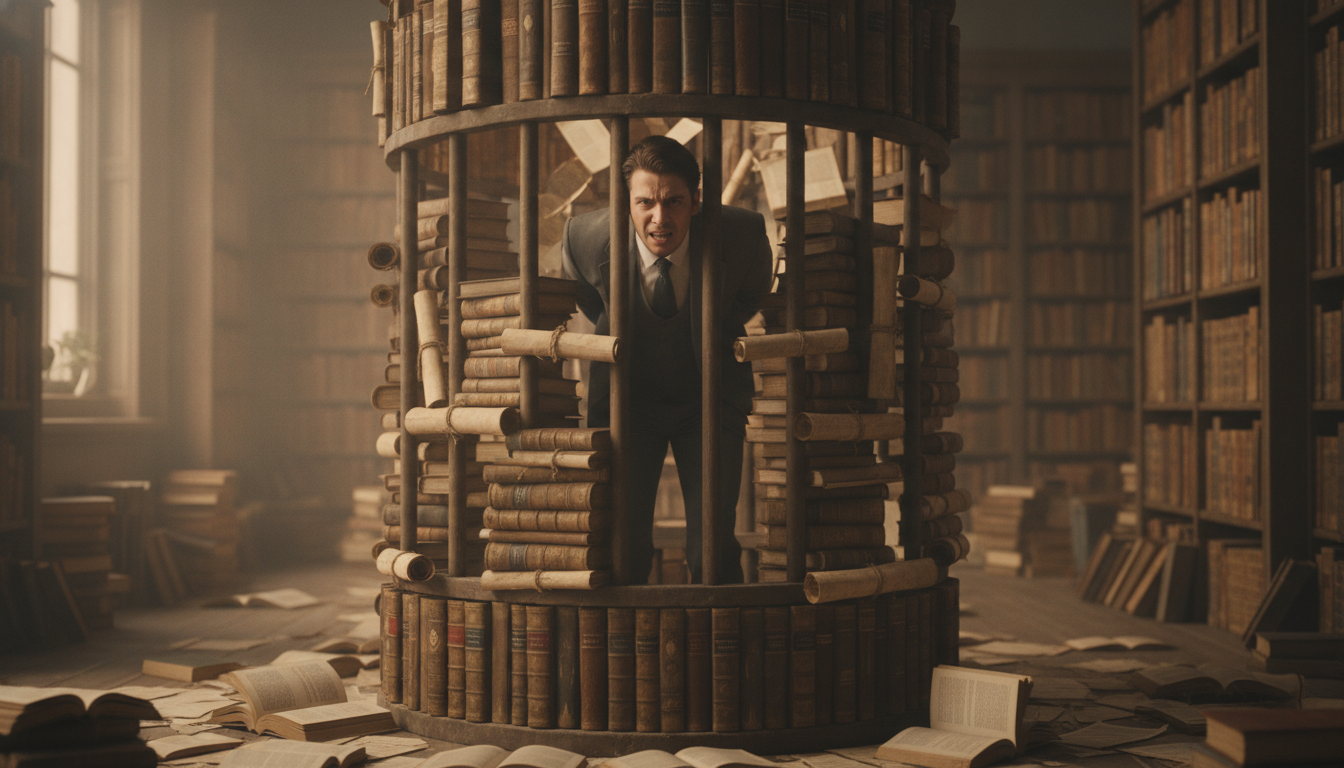
The moment you declare, “I know,” you erect an invisible wall. This wall shields you not just from errors, but from revelations. Your preconceived notions, your neatly categorised facts, become the bars of a self-made prison. You stop asking genuinely curious questions because, well, you already have the answers. This isn’t genuine understanding; it’s intellectual stagnation masquerading as wisdom. True intelligence is fluid, ever-evolving, always open. Static knowledge is dead weight.
- It shuts down authentic curiosity, because why seek what you presume to possess?
- It hardens your perspectives, making you rigid and resistant to the ever-changing flux of reality.
- It creates a profound resistance to new truths, especially those that challenge your carefully constructed worldview.
The Cost of Certainty
The price of thinking you’re smart is steep. You miss out on the incredible, often disruptive, experiences that only come when you approach life with a sense of wonder and genuine not-knowing. The world is constantly unfolding, a perpetual classroom, but if you enter each moment with your internal textbooks already open and highlighted, you’ll hear nothing new. You’ll only hear the echo of your own thoughts.
Missing the Unseen, Unheard Truths
Life’s deepest lessons are rarely found in textbooks or lectures. They are often subtle, whispered, paradoxical. They emerge from vulnerability, from confusion, from the discomfort of not understanding. When you carry the burden of needing to be right, of always having an opinion or a solution, you bypass these profound teachers. You become blind to the nuances, deaf to the silent communications, and numb to the raw immediacy of existence.
- You miss the present moment’s unique teaching, too busy comparing it to what you already “know.”
- You stop listening truly, not just to others, but to the whispers of your own intuition and the universe.
- You avoid discomfort, mistaking it for a sign of failure, when in fact, discomfort is often the fertile ground where growth and deeper insight take root.
The Path to True Intelligence: Unknowing
This is where the paradox truly hits. The path to genuine intelligence, to a life rich with learning, is not through accumulating more facts, but through consciously unlearning, through making space. It’s about cultivating a profound sense of not-knowing. This isn’t ignorance; it’s humility. It’s the willingness to be empty, to be a beginner, again and again.
Embracing the Beginner’s Mind
Imagine your mind as an empty bowl. It is only when the bowl is empty that it can receive. The beginner’s mind is not naive; it is simply open. It approaches every situation, every person, every experience, as if for the very first time. It is curious, receptive, without judgment or preconceived notions. This openness is not a sign of weakness; it is the ultimate strength, for it allows reality to imprint itself directly, without distortion.

- Cultivate it by actively listening, not just waiting for your turn to speak.
- Question everything, especially your own deeply held beliefs. Are they truly yours, or merely inherited?
- Embrace the freedom that comes from not needing to be right, from not needing to have all the answers. The relief is immense.
The Dance of Learning and Unlearning
Life is not a static state of “knowing”; it is a dynamic dance of learning and unlearning. What was true yesterday might not be true today. What served you in one phase might hinder you in the next. To be truly intelligent is to be fluid, to be able to let go of old ideas, old identities, old certainties, when new information or experiences emerge. It is a constant shedding, a constant renewal. This isn’t about discarding knowledge entirely, but holding it lightly, ready to release it for something more expansive.

So, take a moment. Are you clinging to the idea that you’re smart? Is your cup already full? If so, consider the possibility that this very ‘smartness’ is the biggest obstacle to true wisdom. Dare to be empty. Dare to not know. Only then can life begin to fill you with its most extraordinary, most vital lessons, lessons that cannot be found when you’re busy proving what you already think you possess.