The field of psychology has amassed an incredible body of knowledge, dissecting the human mind with scientific rigor. We speak of neurons, cognitive biases, attachment styles, and complex psychopathologies. Yet, even the most brilliant minds, those who have shaped our understanding of human behavior, often remain strangely oblivious to a fundamental truth: the very instrument they use to observe the psyche—their own mind—is itself a part of the grand, unexamined tapestry. They are masters of the external landscape, but often strangers to their own inner terrain. This creates a profound, invisible barrier, trapping them within the confines of their own uninspected hidden psyche.
The Intellectual Fortress and its Limits
The Accumulation of Knowledge vs. Self-Knowledge
Psychologists tirelessly collect data, craft intricate theories, and build models of the human condition. This intellectual pursuit is powerful; it has illuminated countless aspects of mental functioning and suffering. But knowledge acquired from books, studies, and external observation, however vast, is still external. It is a catalog of symptoms, mechanisms, and classifications. The deepest knowing, the kind that transforms, is not found in accumulation. It is found in direct encounter. The professional pursuit often bypasses the raw, unfiltered experience of one’s own inner world, prioritizing external validation over internal verification.
The Trap of Objectivity
Science demands objectivity. In physics, one can study a particle without being a particle. In psychology, the observer is, fundamentally, what they seek to observe. How can one be truly objective about consciousness, emotion, and thought when the lens through which they view it is itself formed by consciousness, emotion, and thought? The desire for scientific distance, while commendable for data integrity, creates an inherent blind spot when the subject matter is the very nature of subjectivity. The psychologist attempts to stand outside the system while being an integral, often unacknowledged, part of it. This is not just a methodological challenge; it is an existential paradox.
The Unseen Observer: The Psychologist’s Own Psyche
The Shadow in the Consulting Room
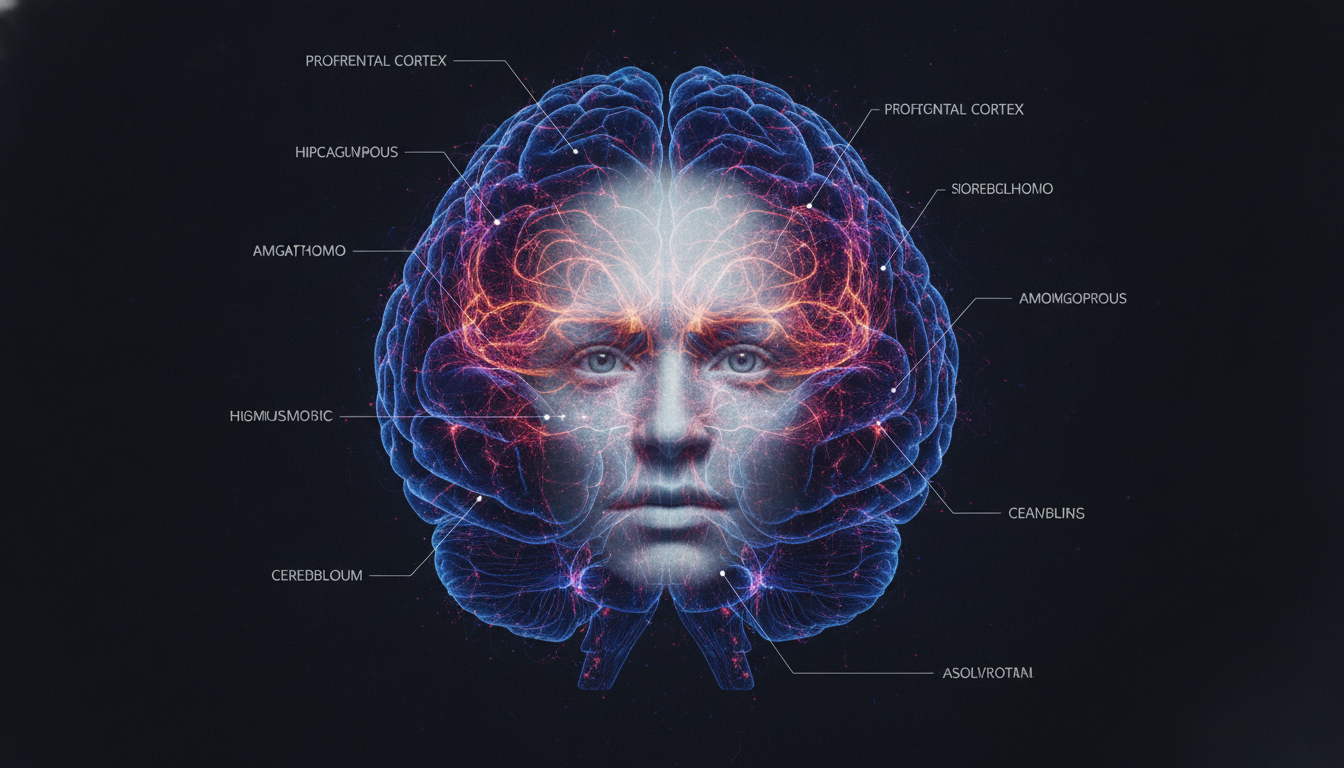
Every therapist, researcher, and theorist brings their entire being into their professional domain. Their unresolved conflicts, their childhood experiences, their unexamined biases, their fears, their unfulfilled desires—all of it forms an invisible filter. This is not merely countertransference, which is typically addressed as a technical issue. This is a fundamental aspect of perception itself. What one sees in the client or in the data is inevitably colored by what one is, what one has suppressed, and what one is unwilling to face within oneself. The analyst who has not deeply confronted their own projections will always miss the deepest projections in others.
The Identity Investment
A psychologist’s identity often becomes inextricably linked to their theoretical framework, their academic achievements, their preferred school of thought. This investment, while providing structure and belonging, can become a formidable barrier to genuine self-inquiry. To truly see the limitations of one’s own psyche might mean dismantling the very intellectual edifice that has defined one’s career and prestige. Truth, in its raw form, often requires the dissolution of ego, not its fortification through credentials and theories. To admit profound personal blind spots is to risk one’s professional standing in a field that rewards expertise, not existential vulnerability.
The Path Beyond the Textbook
Observation Without Interpretation
The deepest psychological insight may not arise from adding another theory to the stack, but from a radical simplification: observing the mind, including one’s own, without the immediate impulse to categorize, diagnose, or explain. This involves a profound stillness, a witnessing that allows phenomena to arise and pass without the overlay of learned frameworks. It is a state of open, choiceless awareness, where the subject and object begin to blur, and the inherent unity of consciousness reveals itself. This is not a technique to be mastered but a state of being to be cultivated.
The Inner Laboratory
The most profound breakthroughs in understanding the human psyche may not happen in sophisticated laboratories or through statistical analysis, but within the individual psychologist’s own inner experience. The “inner laboratory” is where one confronts one’s own conditioning, experiences the raw mechanics of thought and emotion, and observes the subtle interplay of ego and consciousness. This direct, first-hand experience is the only true means by which the hidden filters of one’s own psyche can be revealed and transcended. Without this inner work, all external psychological study remains, to some extent, an intellectual exercise performed by a mind that does not fully know itself.

The smartest psychologists possess immense intellectual capacity and a vast store of knowledge. Yet, true mastery in the understanding of the psyche extends beyond the accumulation of facts. It demands a rigorous, unflinching self-inquiry. Until the observer himself becomes the observed, until the psychologist deeply understands the workings of their own unexamined mind, they will continue to navigate the vast ocean of the human psyche from within a vessel that, however sophisticated, still has a blind spot at its very helm. The ultimate frontier of psychological understanding is not ‘out there,’ but profoundly and intimately ‘in here.’