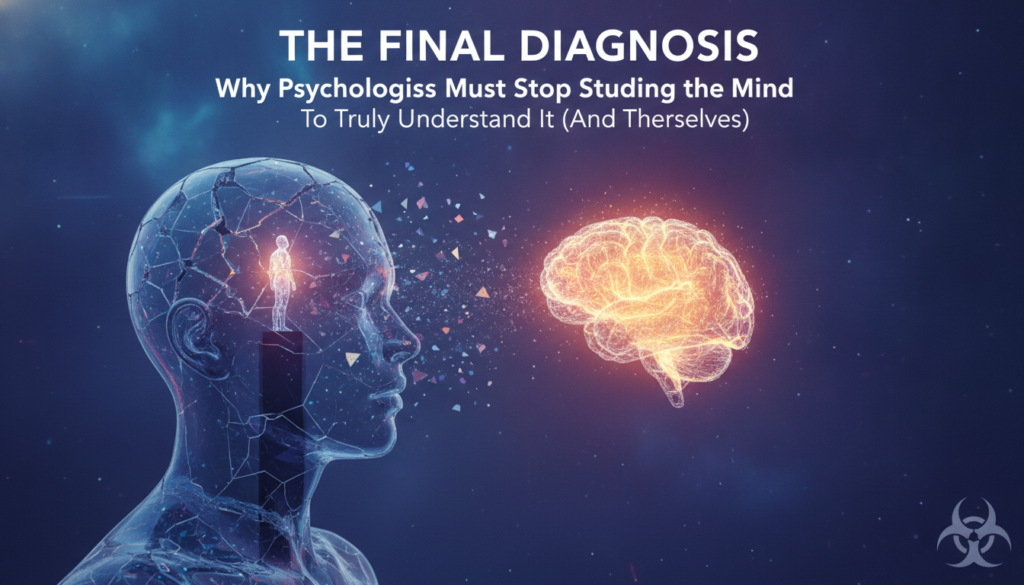
The pursuit of understanding the mind has become an intricate dance of intellectual acrobatics. Psychologists, in their earnest endeavor, dissect, categorize, and theorize about the very instrument through which they perceive and think. But what if this approach, however scientific, is fundamentally flawed? What if the very act of studying the mind prevents its true understanding? The deepest insights may lie not in further analysis, but in a radical cessation of study itself.
The Observer Observed: A Fundamental Flaw
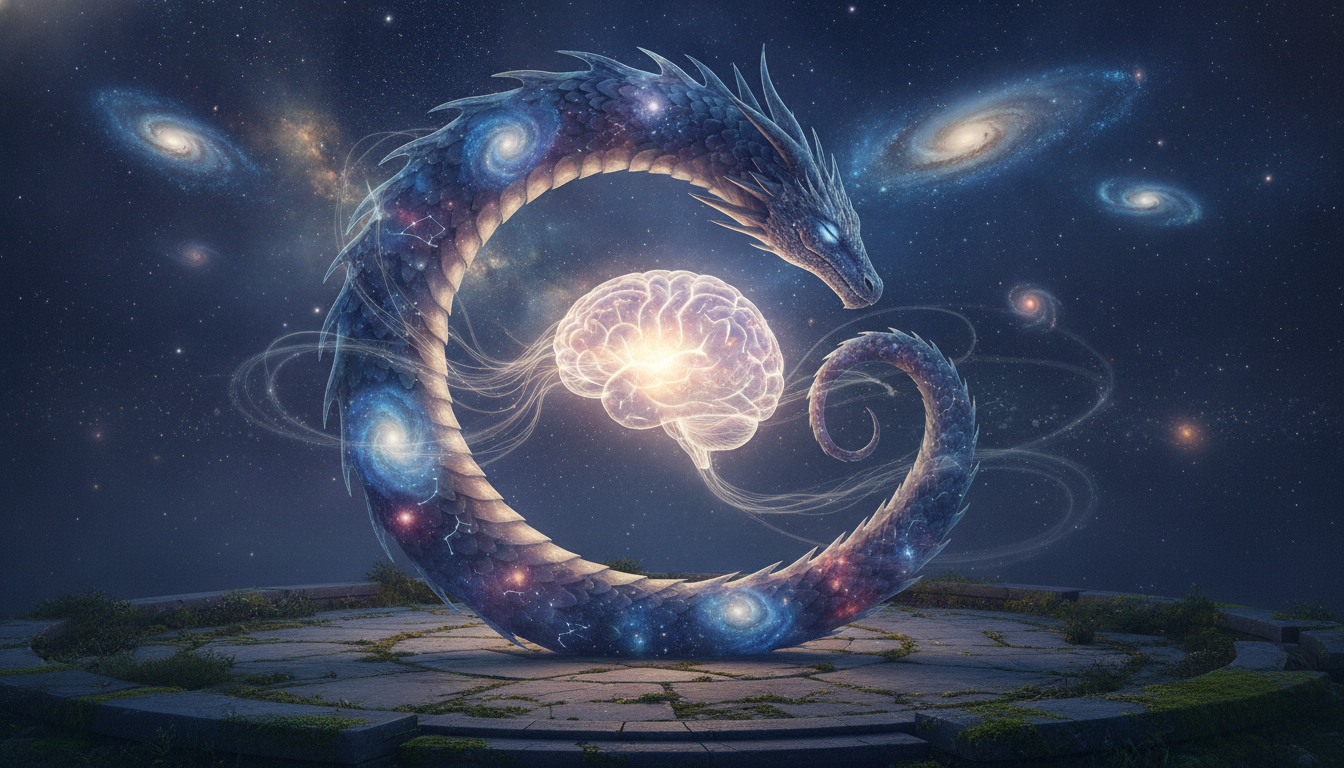
Consider the predicament: the mind is attempting to understand itself. The instrument of observation is simultaneously the object being observed. This creates a circularity, an infinite loop where the seeker is also the sought. How can a tool truly grasp its own essence when it is actively engaged in its own operation? It’s like a knife trying to cut itself, or an eye trying to see itself without a mirror. The very act of ‘studying’ implies a separation between the observer and the observed, a distance that does not exist when the mind is trying to know itself.
The Illusion of Objectivity
Psychology strives for objectivity, constructing frameworks, labels, and theories to define and explain mental phenomena. Yet, these frameworks are themselves products of the mind. They are mental constructs, conceptual maps drawn by the very territory they attempt to chart. We create categories for emotions, processes for thoughts, and models for consciousness, believing that by naming and classifying, we are understanding. But a map is never the landscape. A description is never the experience. This intellectual layering, while appearing to build knowledge, often obscures the direct, unmediated reality of the mind.
The Trap of Knowledge
Accumulating knowledge about the mind, ironically, can become a significant barrier to truly knowing it. Each new theory, each new finding, adds another layer of interpretation, another filter through which we perceive. We begin to see the mind not as it is, but as our theories describe it. This creates a distance, turning the mind into an external object of study rather than an intimate, immediate experience.
- Knowledge as a filter: Our theories and concepts about the mind become lenses, distorting direct perception rather than clarifying it. We see our theories reflected, not the mind in its raw state.
- The distance created: The act of studying implies a separation between the knower and the known. But in the case of the mind, there is no such separation. This artificial distance prevents genuine insight.
- The intellectual maze: The endless proliferation of theories, models, and debates, without ever truly touching the core, leads to an intellectual labyrinth where genuine understanding becomes lost in complexity.
Beyond Concepts and Constructs
To “stop studying” does not mean to become ignorant. It means to transcend the intellectual and conceptual frameworks that define conventional study. It implies a shift from an analytical, dissecting approach to a more direct, intuitive, and experiential mode of apprehension. It is about letting go of the need to categorize, label, and explain, and instead, allowing the mind to reveal itself in its untouched, unfiltered reality.
The Path of Direct Experience: A Different Kind of Understanding
If not study, then what? The alternative path is not an absence of engagement, but a different quality of engagement. It is a path of direct experience, of presence, of pure awareness. The mind, when not being dissected, when not being subjected to intellectual scrutiny, begins to unveil itself in its natural state. It is in the cessation of active mental interference that true understanding can emerge.

Understanding Through Being
Understanding the mind is not about gathering more information *about* it. It is about allowing one’s own awareness to settle, to be present, and to observe the mind’s operations without judgment or interpretation. This shift from ‘knowing about’ to ‘knowing’ directly, through being, is profound. When the mind is simply observed, without the imposition of conceptual frameworks, its mechanisms, its patterns, its true nature become evident. This immediate, non-conceptual knowing is the essence of true understanding, not just of “the mind” as a general concept, but of “my mind,” and ultimately, of “myself.”
The True Diagnosis: From Complexity to Simplicity
The mind’s apparent complexity is often a reflection of the complexity of our intellectual attempts to grasp it. True understanding, paradoxically, often reveals a fundamental simplicity. By stepping back from the endless analysis and categorization, we allow insight to emerge from a deeper, more primal place of awareness. This is the final diagnosis: to truly understand the mind, psychologists — and indeed, all seekers of self-knowledge — must first learn to stop the incessant mental activity that defines conventional study, and instead, embrace a silent, direct witnessing. The greatest tool for understanding the mind is not the intellect, but silence.